King Street is aligned north–south parallel to the River Great Ouse and, today, some 120 metres east of the river bank. Originally it was the main route in the ‘New Londe’ laid out by Bishop Turbe in the 12th century, an area of newly drained and planned town expansion lying between the Purfleet and the Fisher Fleet.
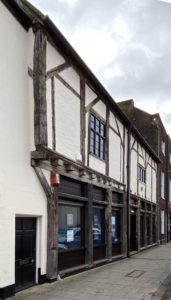
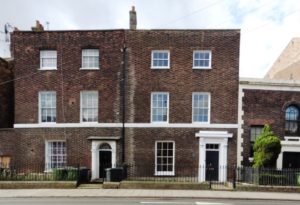
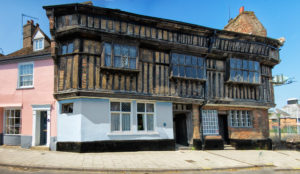
30–32 King Street has the earliest surviving evidence of domestic buildings in King’s Lynn. The centuries have left a complex façade. From north to south, No. 32 is a three-storey, early 19th-century town house whilst Nos. 30 and 28 are two-storeyed timber-framed buildings of the late 14th century. However, inside these exists a 12th-century stone house complete with intact end gables, Romanesque arcading on both walls and a building line clearly defined and distinct from today’s building line.
The three tenements were acquired by the Trust in 1975 which promptly arranged for surveys and plans. A vigorous fundraising campaign commenced and grants were sought. A grant from the Historic Buildings Council was secured with the proviso that the finished building should be open on occasion for public view. Gales in January 1978 blew in the brickwork of the north gable of No. 30 and restoration commenced before more damage was suffered.
By May 1980, the shell of the building had been restored and a special opening was held, to which the public were invited. Trustees were on hand to explain how the buildings had been modified over the centuries.
In early 1985, the whole complex was sold to a firm of local solicitors. They continue to open this important building on Heritage Open Day and by appointment.